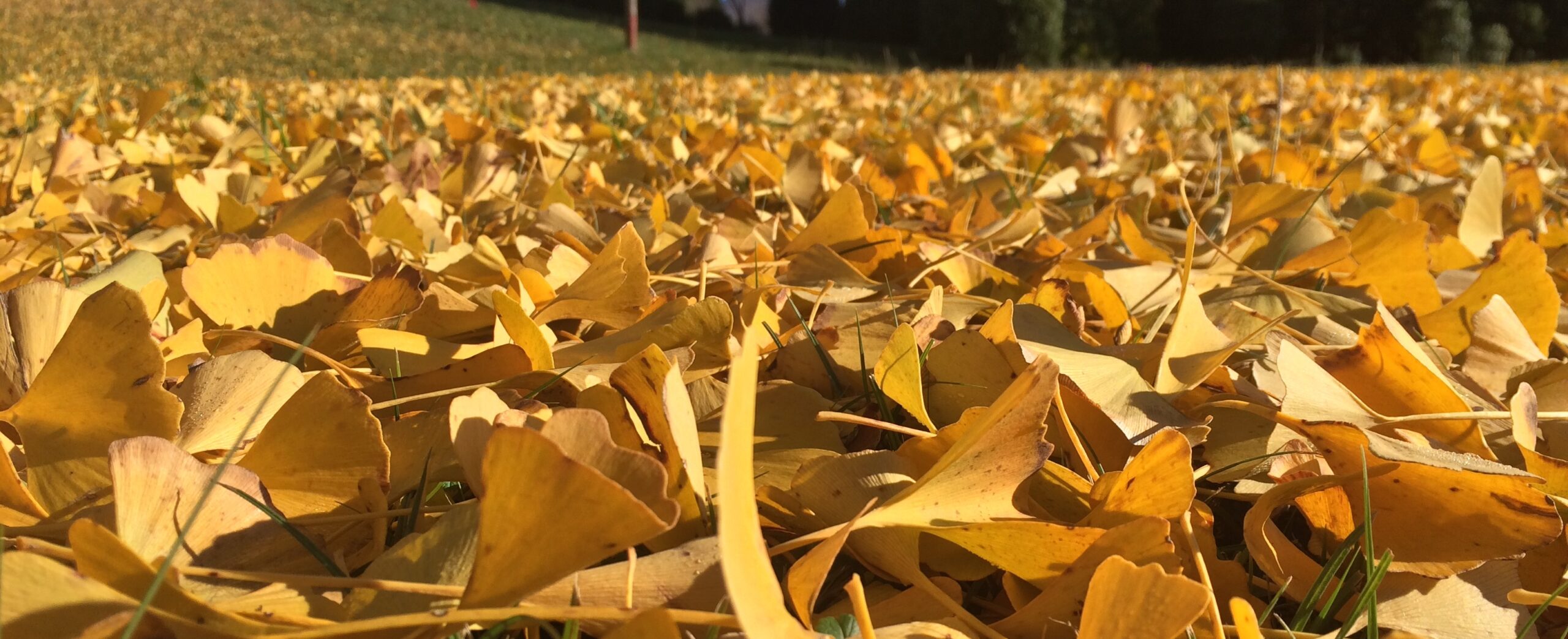
The Ginkgo biloba L. is a large deciduous tree belonging to the Ginkgoaceae family. The species is dioecious, with some plants being male and some being female. The genus (Ginkgo) comes from the word ginkgyo, used to describe the plant in its countries of origin. The specific epithet (biloba) refers to the form of the young leaves, which have a deep division in the central part, appearing almost as two separate lobes. The Ginkgo originates from East Asia and was introduced into Europe in around 1750 from the Xinjiang province, where it was known as a cultivated plant. It is thought to have arrived in Italy for the first time in Pisa. The botanical gardens in the city host many specimens including an impressive male tree planted by Professor Giorgio Santi in 1787. There are many parks in the Lucca area featuring the Ginkgo – in addition to Villa Reale, there is a tree at Villa Querci at Saltocchio, and also at the Spa Hotel in Bagni di Lucca. The Ginkgo is a particularly ancient species and, due to its unique characteristics, is considered a living fossil.The Ginkgo biloba L. is a large deciduous tree belonging to the Ginkgoaceae family. The species is dioecious, with some plants being male and some being female. The genus (Ginkgo) comes from the word ginkgyo, used to describe the plant in its countries of origin. The specific epithet (biloba) refers to the form of the young leaves, which have a deep division in the central part, appearing almost as two separate lobes. The Ginkgo originates from East Asia and was introduced into Europe in around 1750 from the Xinjiang province, where it was known as a cultivated plant. It is thought to have arrived in Italy for the first time in Pisa. The botanical gardens in the city host many specimens including an impressive male tree planted by Professor Giorgio Santi in 1787. There are many parks in the Lucca area featuring the Ginkgo – in addition to Villa Reale, there is a tree at Villa Querci at Saltocchio, and also at the Spa Hotel in Bagni di Lucca. The Ginkgo is a particularly ancient species and, due to its unique characteristics, is considered a living fossil.